From Store to Warehouse: How to Transport Large Quantities of Clothing Without Wasting Time
Load, move and unload your clothing in a fraction of the time, without folding a thing.
Moving a collection between a store and a warehouse sounds simple on paper. In practice you unhook, fold, wrap, load, unload, unwrap, then steam a good share of what arrives. Each step looks harmless, but stacked together they turn a two-hour transfer into half a day.
For a business that moves clothing every week, that lost time is not a detail: it is a recurring cost, invisible on invoices but very real in paid hours.
The real cost is not the box, it is the handling
When you break a transfer down, the transport itself rarely takes more than a third of the total time. The rest goes into preparation and recovery: folding carefully, protecting delicate pieces, then steaming on arrival.
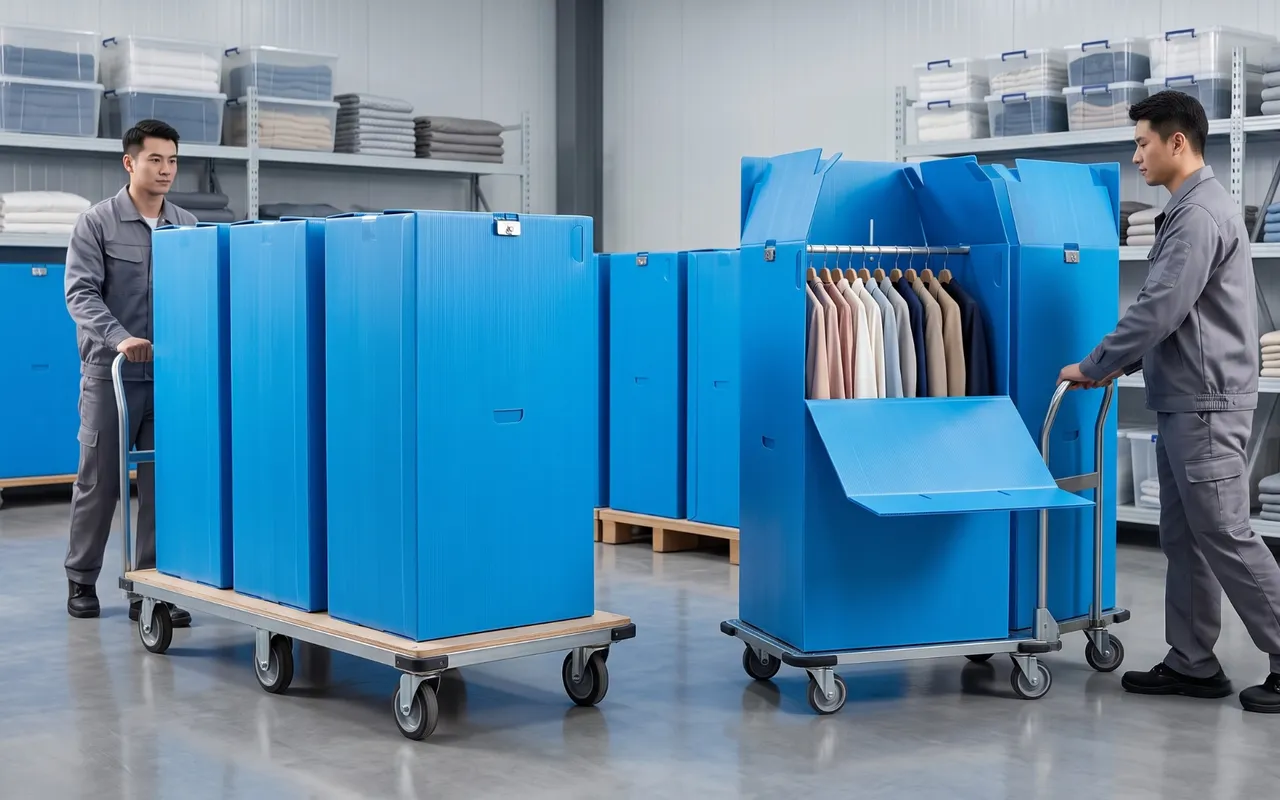
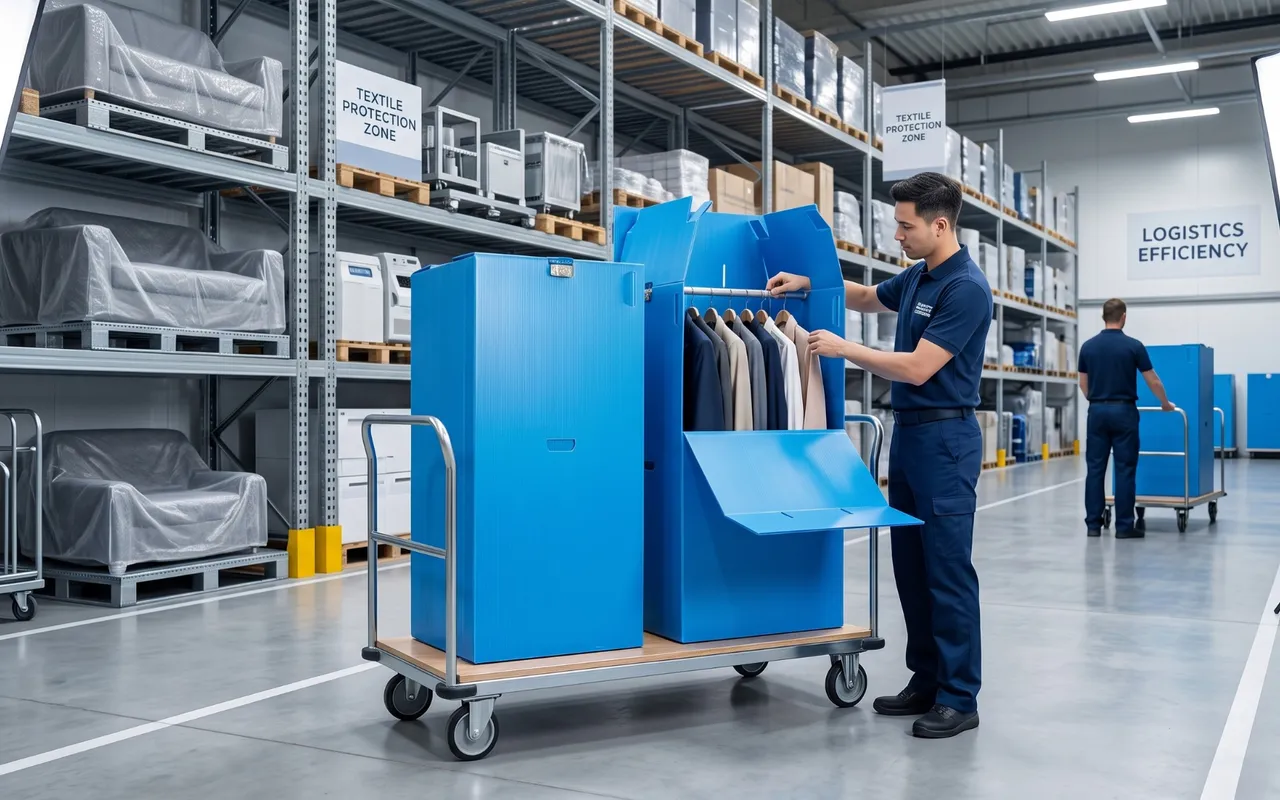
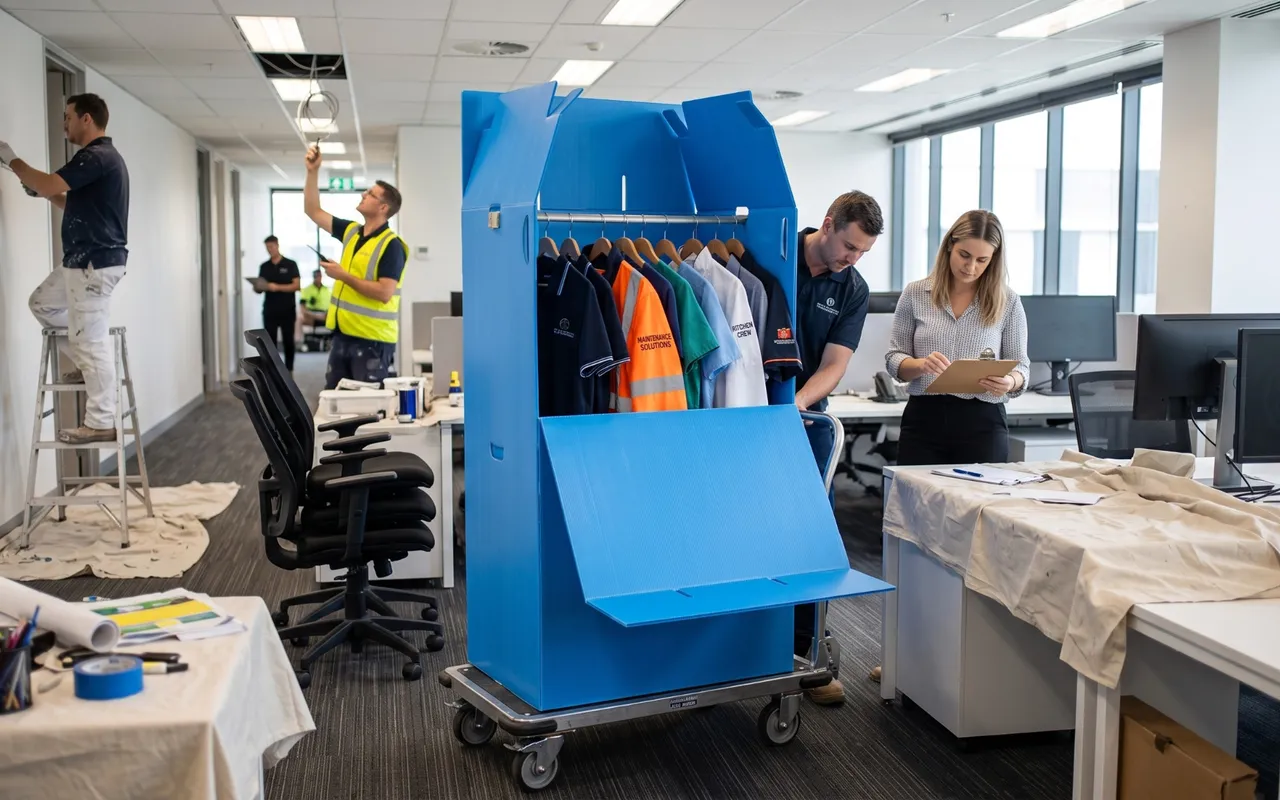
By moving garments hanging, you remove two complete handling stages — one at departure and one at arrival. The garment goes from the store rack to the bar inside the box, then from the bar to the warehouse rack. It is never folded, so it never needs steaming.
What an optimized flow looks like
- Take garments off the rack and hang them straight into the box, with no individual wrapping
- Close, stack and roll: the rigid structure carries weight without crushing the contents
- On arrival, hang them straight back: no steaming, no sorting, no losses
- The box goes back empty or folded, ready for the next transfer
A gain you can actually measure
Take a typical transfer of 150 garments. The classic method costs roughly 20 to 30 seconds per piece to fold and wrap, about the same to unwrap, and a minute to steam whatever needs it. You pass two hours of labour easily.
With hanging transport, the same job drops to a few seconds per garment, with no steaming stage at all. Across a single day, the difference frees up hours your teams can spend selling or merchandising instead.
Predictable week after week
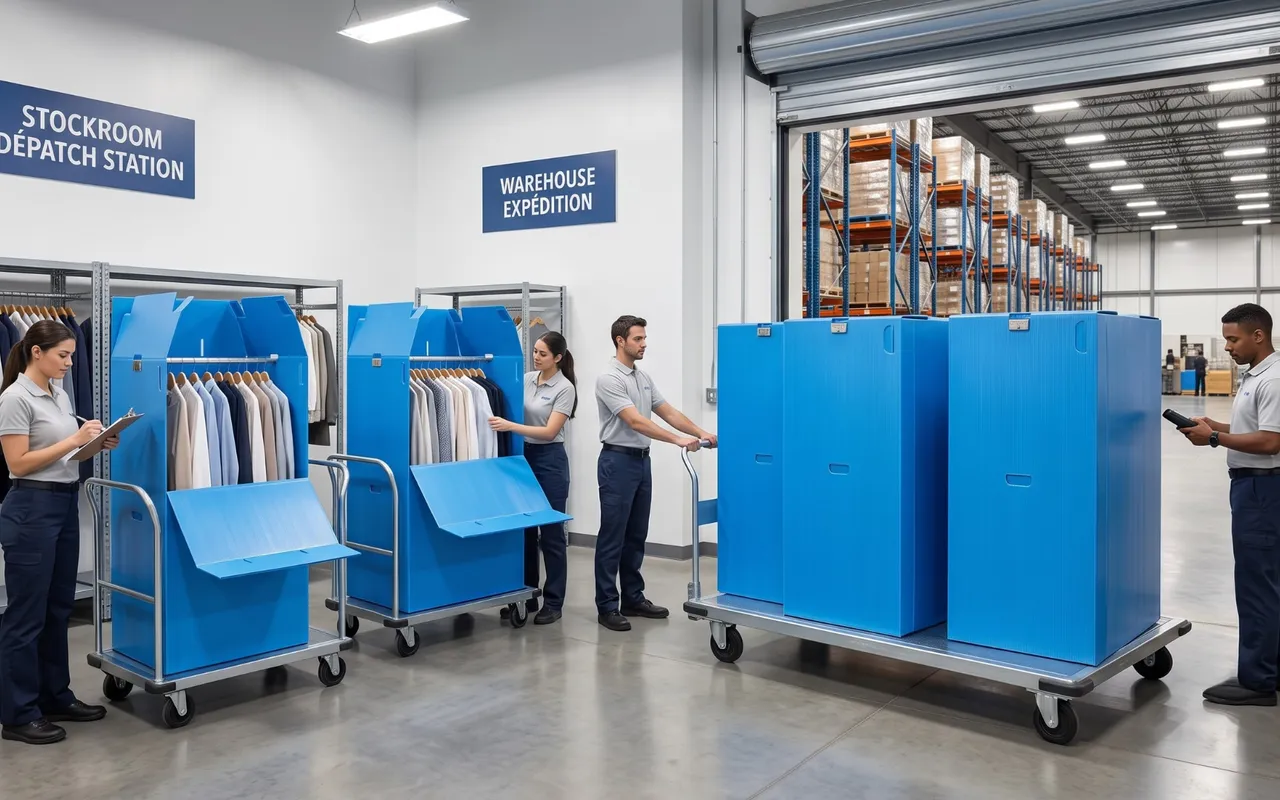
A uniform format also changes planning. Your teams know how many garments fit in a box, so they know how many boxes fill a truck. Inventory is counted in containers instead of loose bags, and counting errors drop.
It is easier to delegate too: a new employee understands the method after one demonstration, with no risk of damaging a piece by folding it badly.
The takeaway
The container does not just carry the clothing: it decides the total time of the operation. Choosing a box designed for hanging transport, rigid and reusable, removes the two slowest steps of the whole process.
Transferring clothing between store and warehouse regularly? See our volume pricing or contact us for an order matched to your pace.