5 Tips for Moving Companies to Safely Transport Delicate Clothing
The right box, the right loading, the right stacking — and winter in mind.
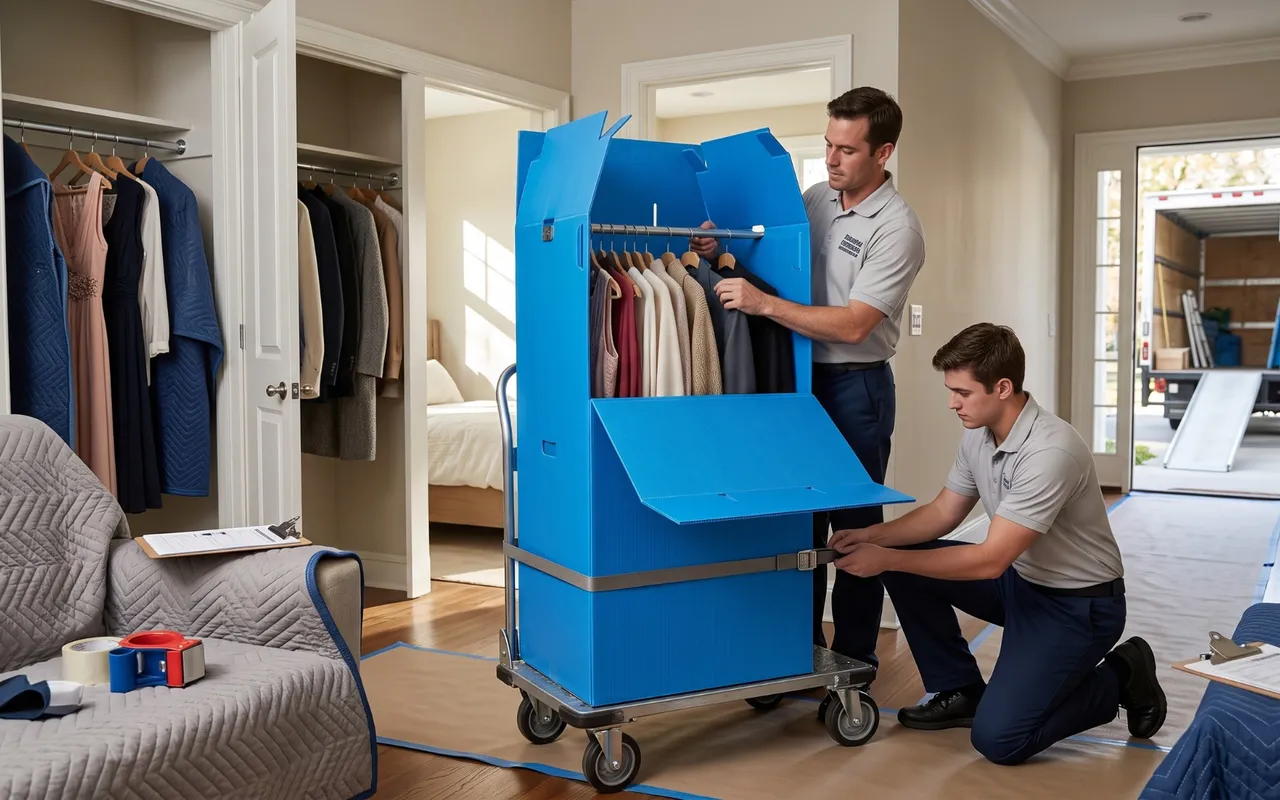
Delicate clothing is, statistically, the most claimed category after a residential move. It is not about carelessness: these pieces simply do not tolerate the standard treatment applied to the rest of the load.
The good news is that five simple habits remove the vast majority of problems. None of them adds time once the method is learned.
1. Use a dedicated container
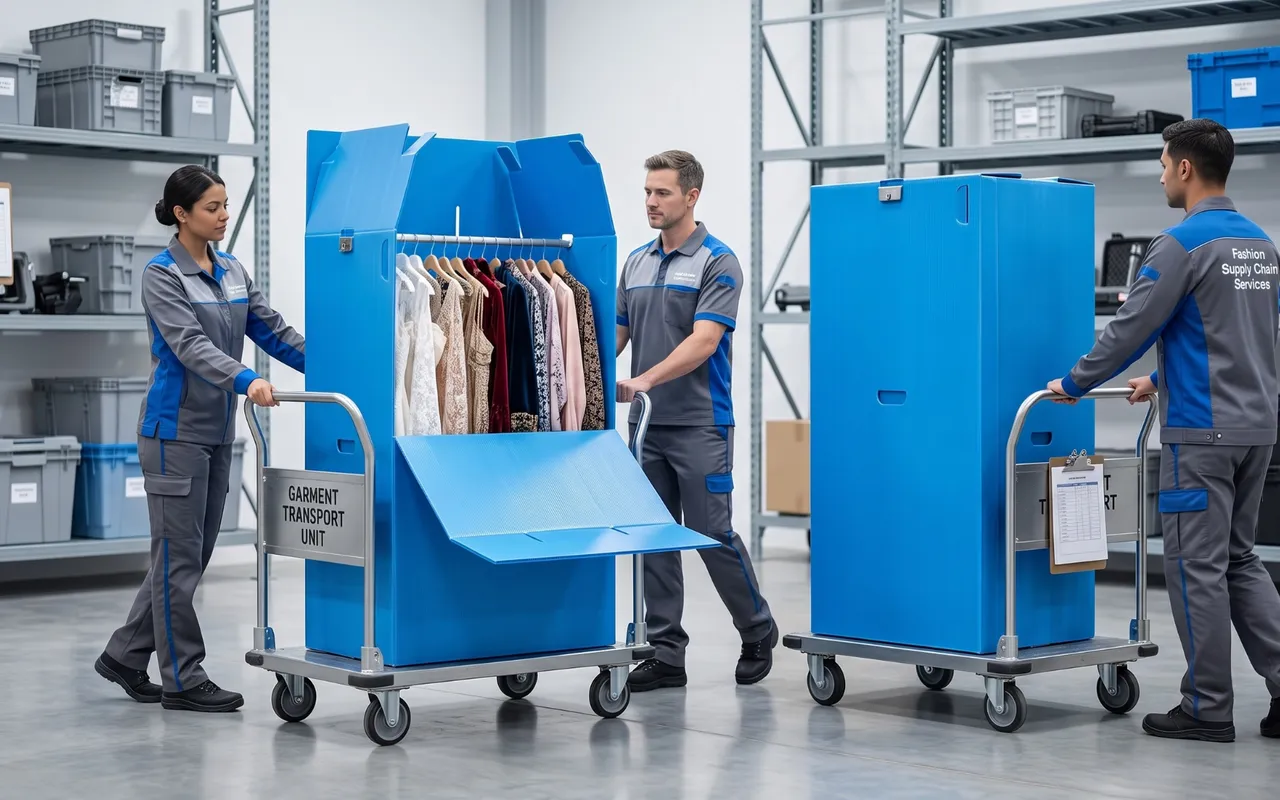
This is the decisive one. A box with a built-in bar removes folding, which is the main cause of creases, shoulder marks and deformed collars.
Material matters too: a rigid, water-resistant container protects against crushing and moisture, two risks a bag or carton does not cover.
2. Do not overload
This is the most common mistake, and it cancels the benefit of the right container. When hangers are packed tight, garments compress each other and mark exactly where it shows most: the shoulders.
Always leave a few centimetres of slack. One extra box beats one overstuffed box.
3. Load intelligently
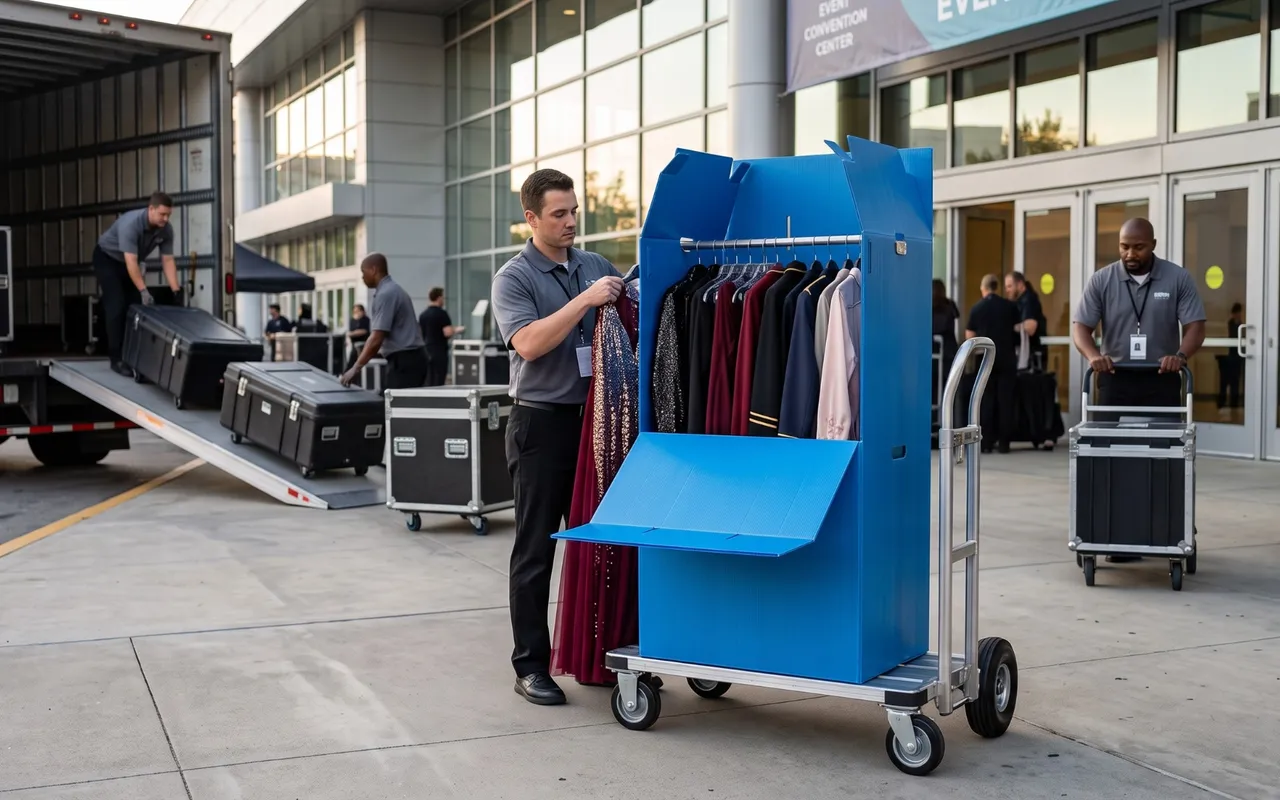
- Clothing boxes go in last and come out first
- Always upright, never laid down, not even for a few minutes
- Wedged against a wall so they cannot slide on corners
- Never under furniture or heavy items
4. Stack without crushing
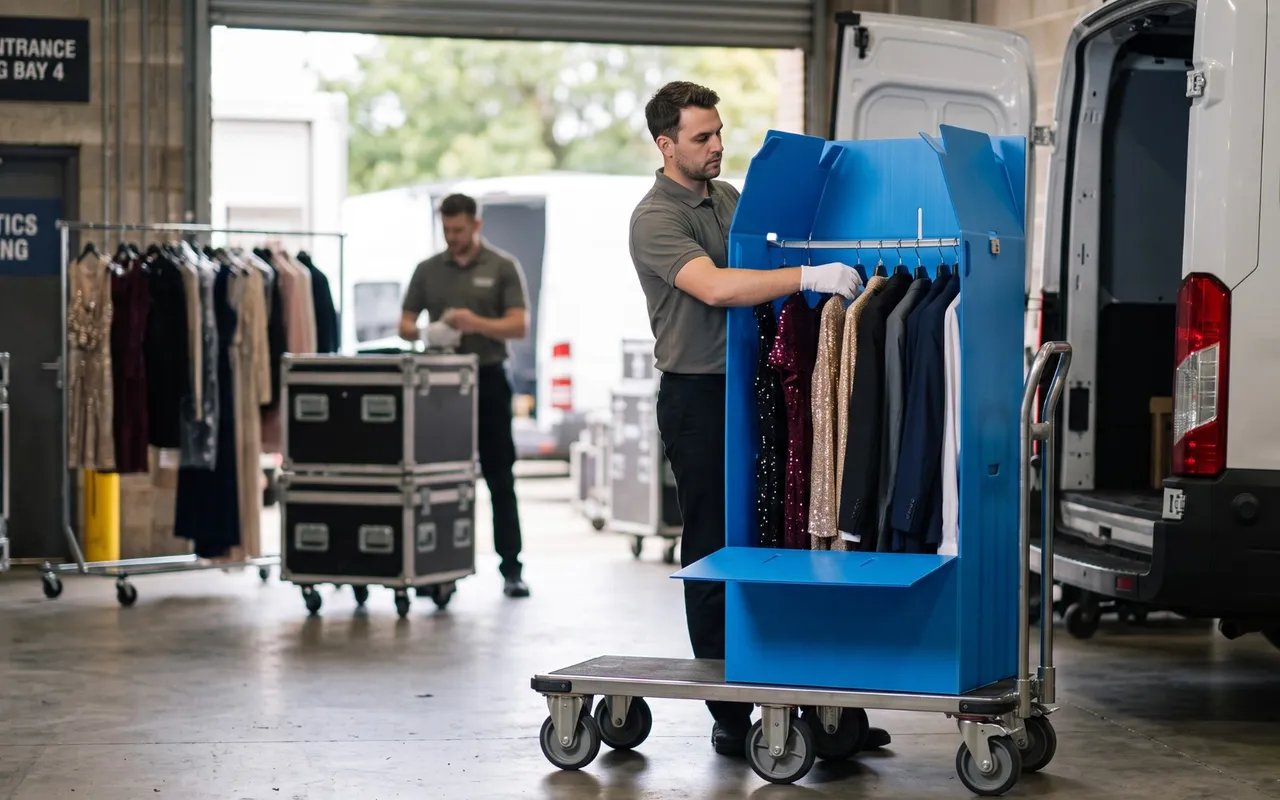
In a truck, space is gained vertically. The rigid structure of corrugated plastic carries the weight of a second box without passing the load to the contents, unlike cardboard that gradually collapses onto the garments underneath.
Still, limit stacking to two or three levels, especially on a long trip or a rough road.
5. Plan for winter
In Quebec this is no side note. Cold makes some materials brittle, and melting snow soaks through cardboard within minutes on a loading dock.
Corrugated plastic keeps its rigidity down to ‒25 °C without cracking, and does not absorb water. For a January move, that is the difference between a clean delivery and a run of claims.
The takeaway
These five habits do not lengthen the job: they structure it. Once the crew adopts them, they become automatic and eliminate the main source of disputes in residential moving.
Equip your crews: ask for volume pricing.