How to Safely Transport Clothing Collections Between Stores and Locations
Your collections move between locations and go straight back on the floor.
In fashion retail, clothing moves constantly: stock rebalancing between locations, returns to the warehouse, setting up a pop-up, end-of-season transfers. Every move is a chance to damage merchandise that has not been sold yet.
And unlike damage in store, a garment damaged in transit is often only noticed when it goes back on the floor — too late to react.
The trip is retail’s weak link
Between the store rack, the truck and the receiving stockroom, garments often change containers two or three times. Every change adds a handling step, and every handling step adds risk.
Transport bags compress, cartons deform, and folding leaves marks on structured fabrics. By the end, part of the collection needs pressing before it can be displayed.
One container from start to finish
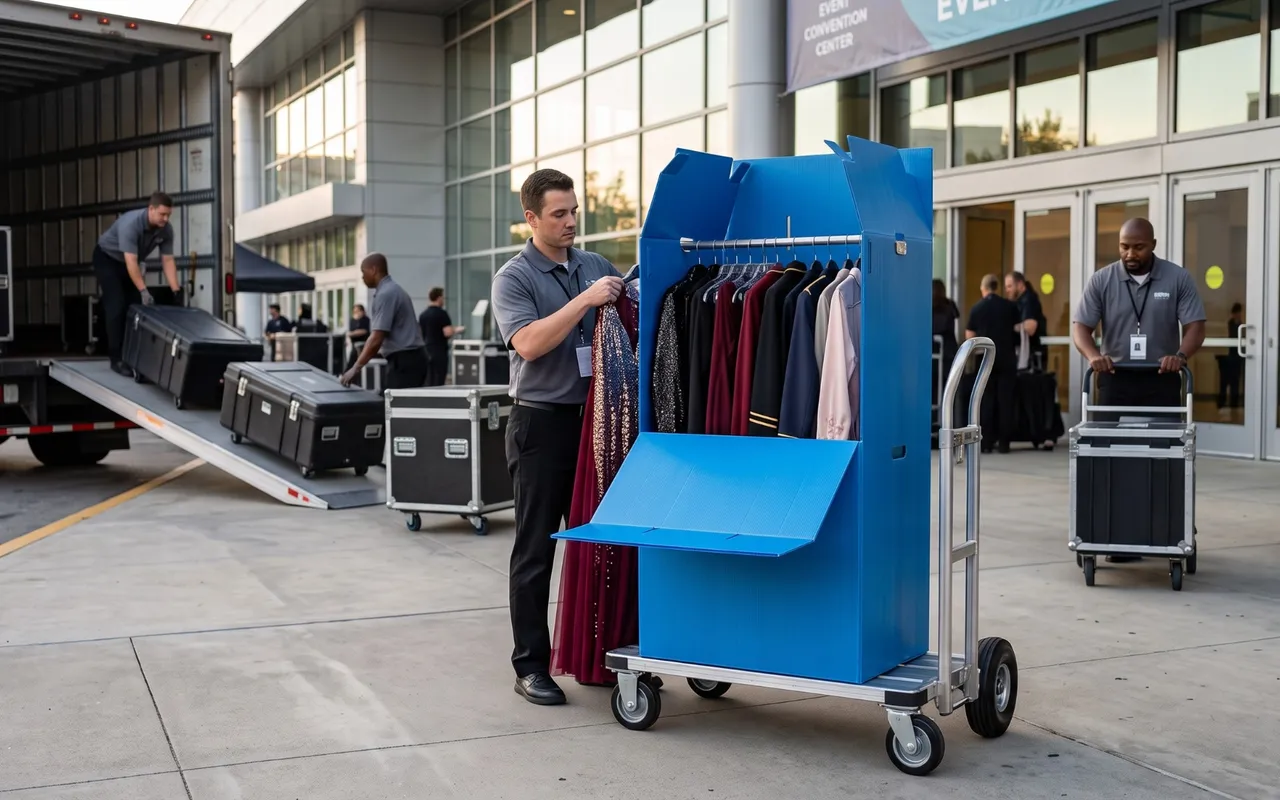
The logic is simple: the fewer transfers, the lower the risk. A container that takes garments straight off the rack and returns them untouched removes the intermediate stages.
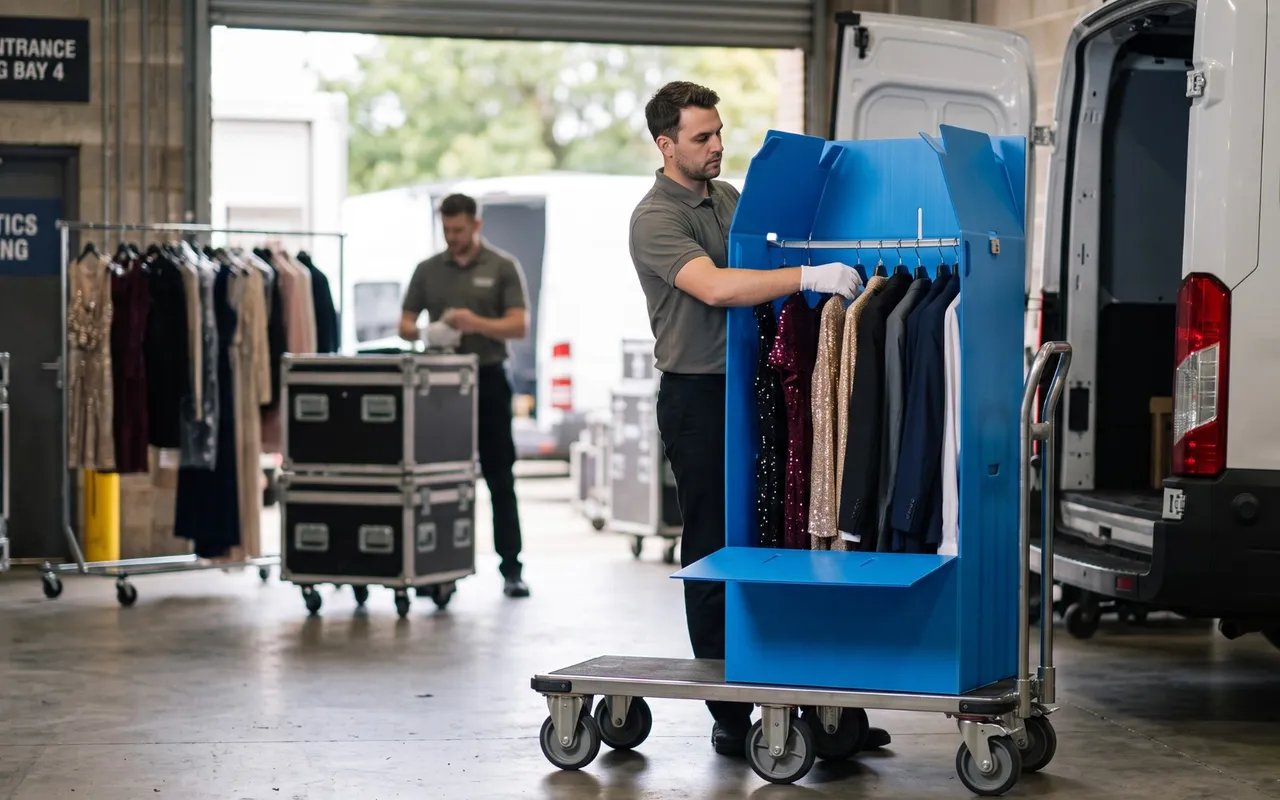
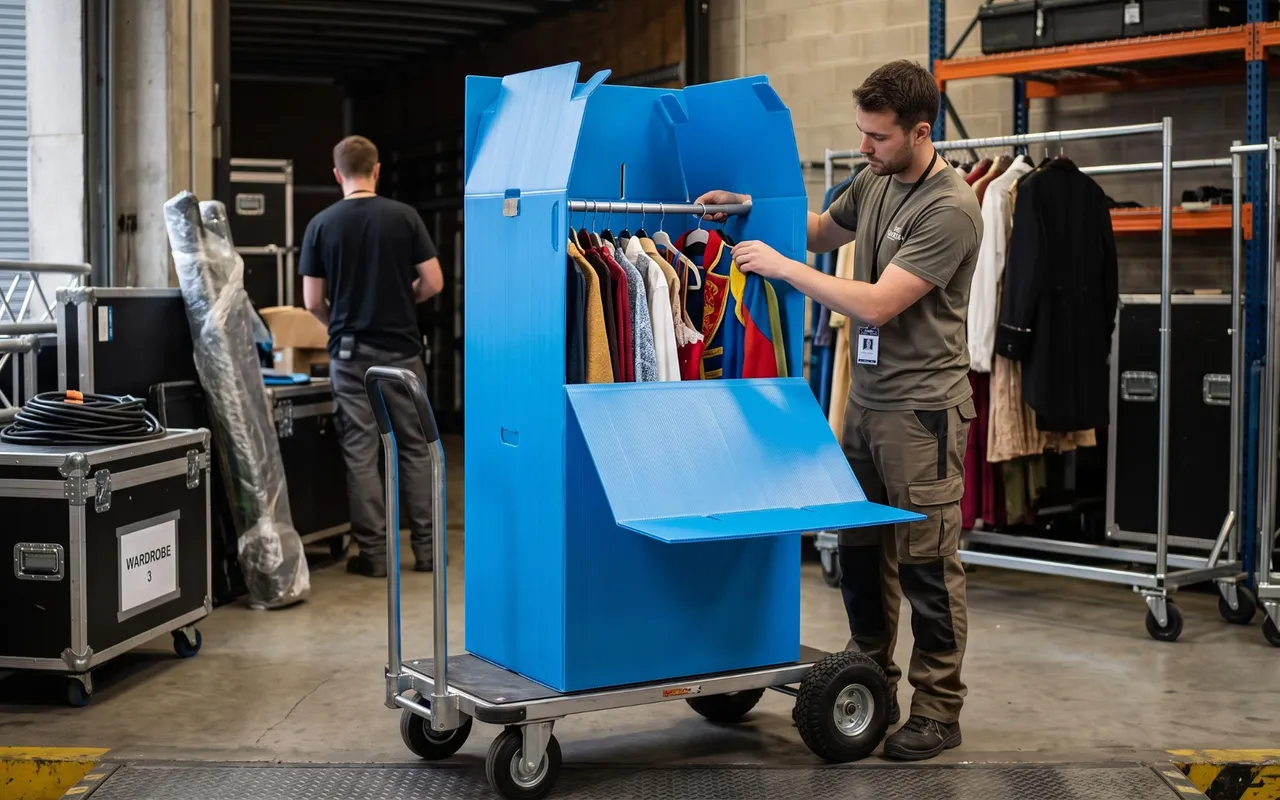
- Load straight from the rack, with no piece-by-piece wrapping
- Enclosed: protected from dust, rain and rubbing
- Rigid: nothing gets crushed, even stacked in the truck
- Reusable: the box comes back and serves the next transfer
What changes at receiving
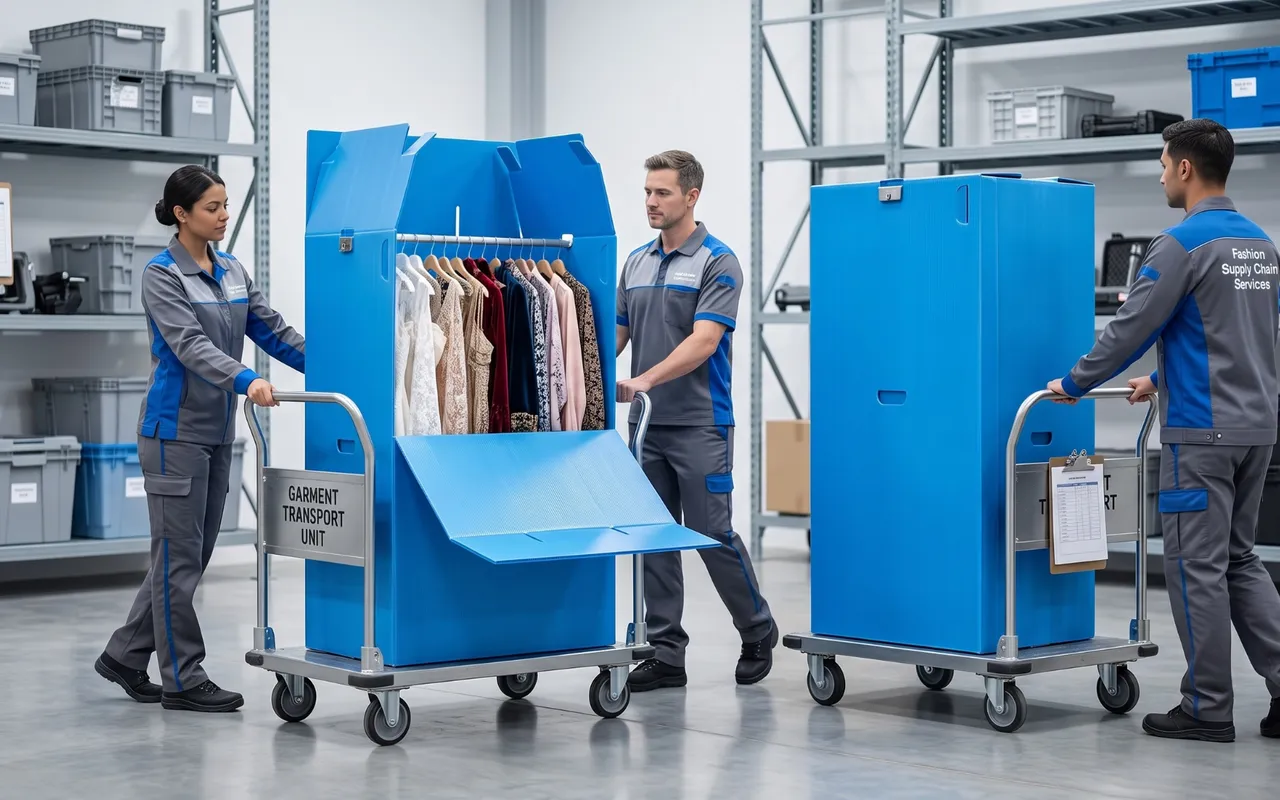
The receiving team opens, unhooks and merchandises. There is no sorting, no steaming, no drawn-out quality check. A delivery that used to occupy two people for an hour is often handled in fifteen minutes.
It is also easier to control: a uniform format lets you count containers instead of bags, and spot a missing item immediately.
Fewer markdowns, more margin
This is the argument management cares about. A garment that arrives flawless goes back on the floor at full price. A marked garment ends up discounted, or ties up labour to be restored.
Across a season and several locations, cutting your markdown rate by a few points quickly means thousands of dollars kept — against a container investment that does not repeat.
Check this before your next transfer
Are garments folded at any point of the trip? Can the container be stacked without crushing its contents? Does it survive a wet floor or a rain shower during loading? If any answer is no, the transfer is still a risk.
Optimize your inter-store transfers: see our volume pricing.